
Describe the layers
A carton sample and a car mat can follow much the same digital outline while making different demands on the cutting edge. For a sample carton, the buyer often cares about a clean outer liner, a sound fold and tabs that fit together. For a mat, the decisive test may be the bottom backing, a tight radius near an anchor hole or a pile edge that remains neat after handling. Start by identifying which surface and feature the customer will inspect.
Describe the complete stack, starting at the face and working down. A carton may combine a printed liner with fluted board, while another sample uses dense greyboard and a wrap. A mat may include a textile face, foam, adhesive and a rubber backing. Give the thickness of the finished stack rather than adding nominal layer values from separate data sheets. If the stack compresses during hold-down, explain that observation to the operator. It affects what can be concluded from a neat-looking top surface.
If the two jobs share a cutting table, mark the table location on the sample record. A blank taken from one corner of a worn underlay may behave differently from the same stock placed elsewhere. Have the operator check the approved condition of the backing. A new blade should not be used as a substitute for repairing an unsuitable support surface. For a mat with a textured face, also note which face was placed against the table and whether the texture held the stock away from the support.
Match the cutting operation
Keep through cuts and fold preparation separate in the request. Cutting the carton outline removes waste. A crease or a V-groove leaves a controlled connection for folding. An attractive fold on a sample therefore does not identify which blade should be used for the through cut. Mark these operations in different colours on the same drawing and show which face is outside the assembled box. For a mat, similarly separate the outer profile from holes, slots or internal details that use a different tool.
The three RUKDP products linked below are useful examples of why the outside dimensions are only part of the story. Consult each product individually for the edge length published in that store. A long working edge is not automatically preferable for either application. There must be enough usable edge for the material and enough support from the installed holder. Ask the operator to check the head manufacturer’s limits before a trial and make the initial comparison on offcuts from the actual job.
Discuss the waste as part of the purchase specification. A carton insert may be accepted only if small waste islands release without tearing the liner. A mat blank may have to keep a clean opening around a fastening point even after it is flexed. Set aside the waste and the finished piece together. Their matching outlines can show where the stock was pushed aside rather than completely separated. A photograph of both pieces gives a remote reviewer a way to follow the cut.
Approve the finished part
For a carton trial, cut both across and along the flutes and keep a small tab on the test shape. Inspect the tab after folding, not just while the sheet lies flat. For a mat trial, include a curve and a point at which the backing changes direction. Turn the sample over and photograph any exposed adhesive or uncut fibres. If the defect is repeatable, mark its position on a second coupon. This lets sales and production talk about the same event rather than interpreting a broad description such as rough cutting.
Plan the reorder around the approved result. File the cutting sample, material lot, blade merchant code and purchase quantity together. If the customer changes the liner or substitutes a denser backing, review the trial even if the written thickness looks similar. There is no fixed replacement interval in these listings. A change in edge quality, growing fibres at a repeatable point or a persistent incomplete layer gives the workshop a more useful trigger for inspection than an unsupported promise about service hours.
Separate a quotation for the trial from a reorder for production. State the number of pieces required for evaluation and whether the final order will use the same material and drawing. If approval depends on a downstream process, such as folding or fitting a mat around a fastener, complete that step before calling the trial successful. It is much cheaper to discover a problem in the sample than after the operator has cut a full stack.
Read the selected ZMUSREN listings
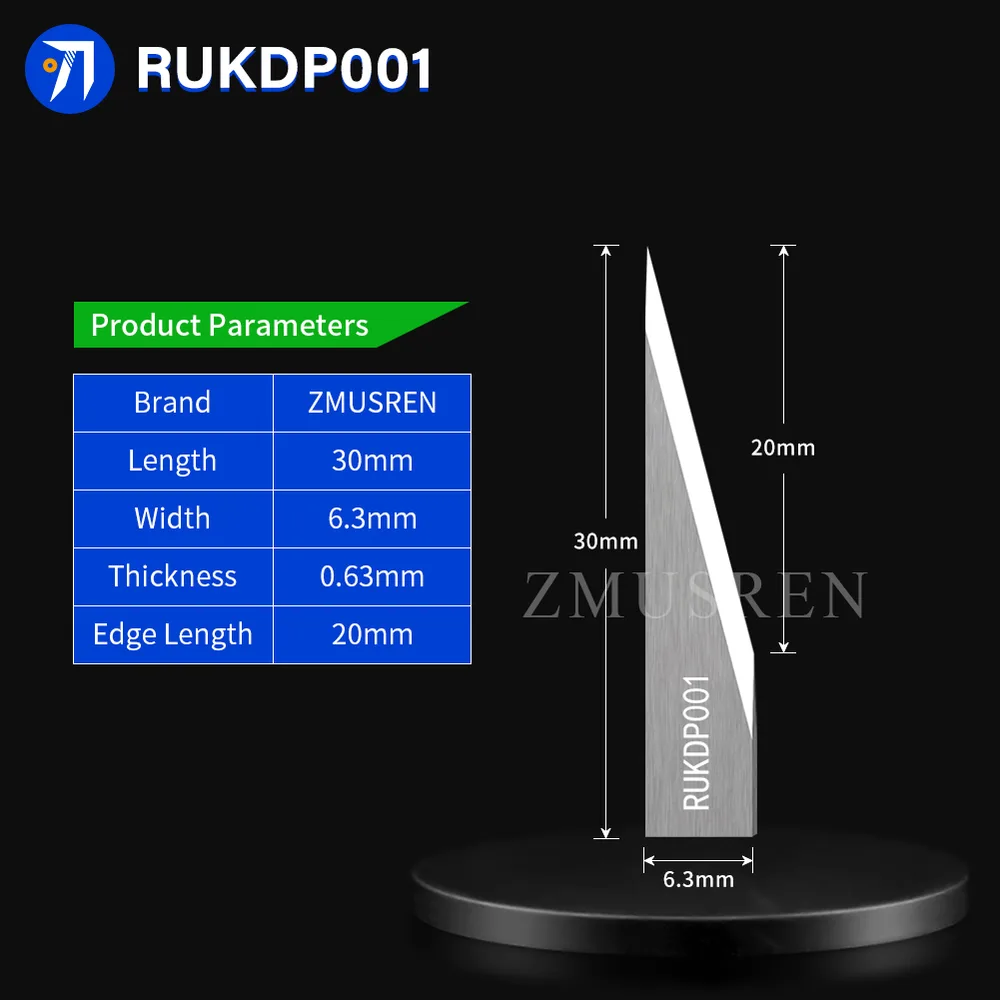
RUKDP001 is listed as tungsten carbide (cemented carbide) with a hardness range of 88–95 HRA. The photograph below is tied to the selected blade. Compare the broad face and clamping end with the tool in your hand. A store photograph is an identification aid; it is not a scale drawing. If the mounting face looks different, send the drawing and a separate side view before requesting a trial.
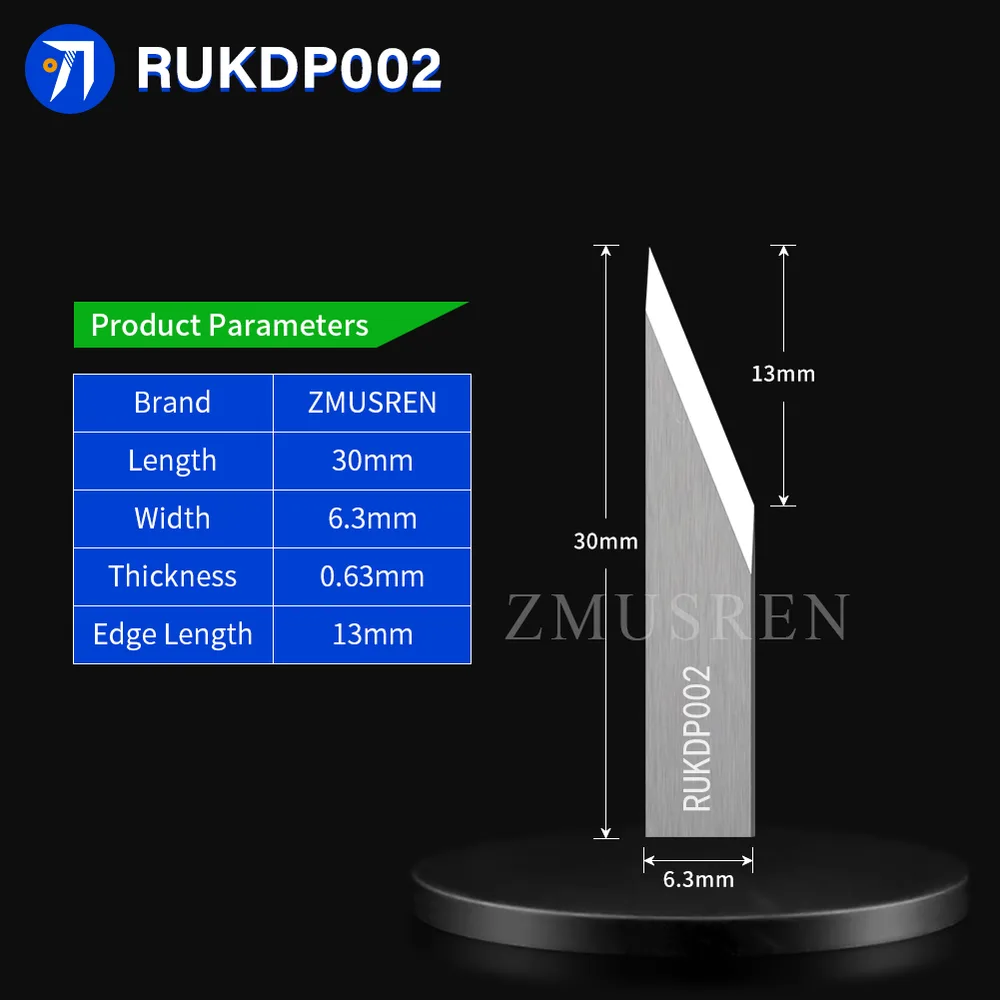
The selected pack for RUKDP002 is shown as 10PCS. Keep that pack description separate from the blade dimensions when preparing a requisition. A request for a number of pieces is easier to check than a request for several packs of unspecified size. Ask the supplier to confirm how many individual tools will arrive and which profile the workshop should inspect on receipt.
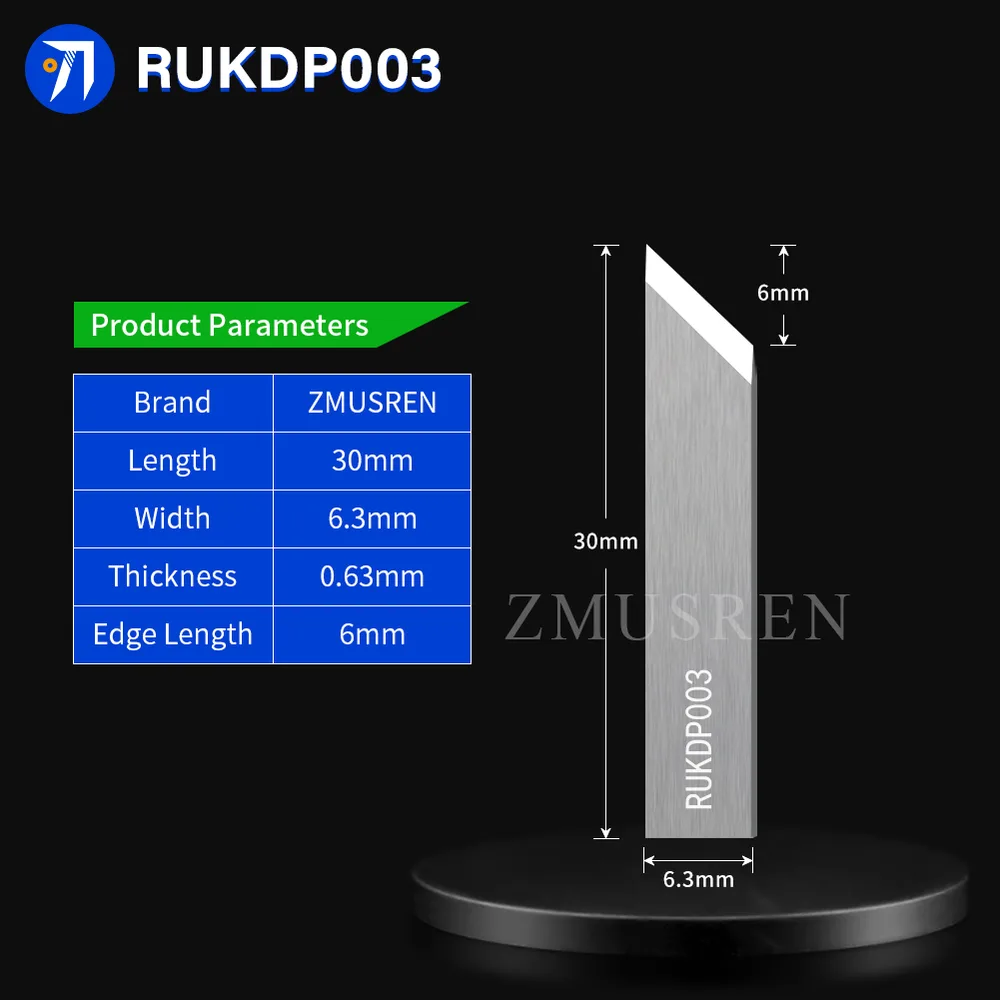
Use the product page for RUKDP003 as an independent reference when discussing the trial. The page links the chosen variant to the photograph and the inquiry. Include that link with your material description and acceptance sample so that the supplier opens the same option. If the marking on an existing tool is incomplete, say which part is missing rather than treating the closest catalogue name as a confirmed identification.
Continue with blade profiles in this family, or check replacement blades by machine.