
Inspect the inside and outside corner
The outside corner of a gift box is a better starting point for a grooving inquiry than the knife alone. Put the finished box beside its flat blank and identify which face carries the wrap. Is the defect a visible line in the paper, a corner that refuses to close, or a hollow space under the folded edge? Each observation describes a different part of the finished joint. A photograph taken before and after folding shows more than an isolated picture of the channel.
Read a blade dimension as a description of the blank and its fit. The familiar sizes on the product links below do not specify a groove depth. Width can affect how a blade sits in its fixture, while length is measured on the tool itself. The working geometry comes from the blade, the way the holder presents it and the material that remains after the pass. Do not transfer a depth setting from another order merely because the blades have the same thickness.
Consider how the box will be viewed in use. On a dark wrap a light stress line can be obvious even when the panels meet neatly. On textured paper a slight bow may be more visible than a small change in colour. Choose a lighting direction and viewing distance that reflect the finished presentation. Photograph the approved and rejected corners together. A technical drawing defines the intended geometry, while that photograph records the appearance the customer has agreed to accept.
Define the working geometry
Clarify what an angle on a drawing refers to. The angle at a ground cutting edge, the included angle of an open channel and the angle between two panels after folding are different observations. Label the view on which the measurement was taken. A section through an approved box corner is particularly helpful. Include the wrap, adhesive line and remaining board under the groove. A drawing with those layers visible gives the toolmaker a clear target even when the previous blade marking has worn away.
Use representative board for the trial. Compare a sample taken near the edge of a sheet with a sample further in if the board feels uneven. Fold each piece in its intended direction and leave the outer face visible for inspection. Check whether fibres lift at the bottom of the groove and whether the wrap shows a white stress line at the corner. Record a change in board supplier, grade or facing before deciding that a different knife is required.
Check for a difference between a single test groove and a series of parallel grooves on a full blank. The blank may be supported differently after material has already been removed nearby. Mark the order in which the grooves were cut and leave a strip of board between two of them for inspection. If the problem appears only on the final fold, send a drawing of the complete blank. A single cropped image can hide the surrounding geometry that makes the fault repeatable.
Evaluate the fold and the pack
If one side of the groove consistently looks rougher than the other, identify the side on the drawing. Look at the holder location, seating surface and whether the stock stayed flat. A defect that changes sides when the blank is turned deserves different attention from a defect that always follows the same fixture position. Keep adjustments within the machine instructions and ask the responsible operator to review the setup. A description of this comparison is more useful for a tooling inquiry than a request for a sharper edge alone.
Agree how wear will be judged. A knife may still remove material while no longer producing a corner acceptable on a finished rigid box. Keep an approved folded sample with the job and compare later pieces under similar light. Record the merchant code, board thickness, wrap and packing requirement on the reorder. When a new order changes the corner profile, send the revised drawing and a fresh folded sample before assuming that the previous setup still represents the customer’s acceptance standard.
For purchasing, record whether the selected pack is described in pieces or pairs. Both units occur in shop listings, and they mean different things on a requisition. Ask for the quantity of individual knives as well as the number of sets needed by the machine. When a replacement goes to a second production line, check that line’s clamping arrangement separately. A matching box design does not establish that the two lines present their knives at the same angle.
Read the selected ZMUSREN listings
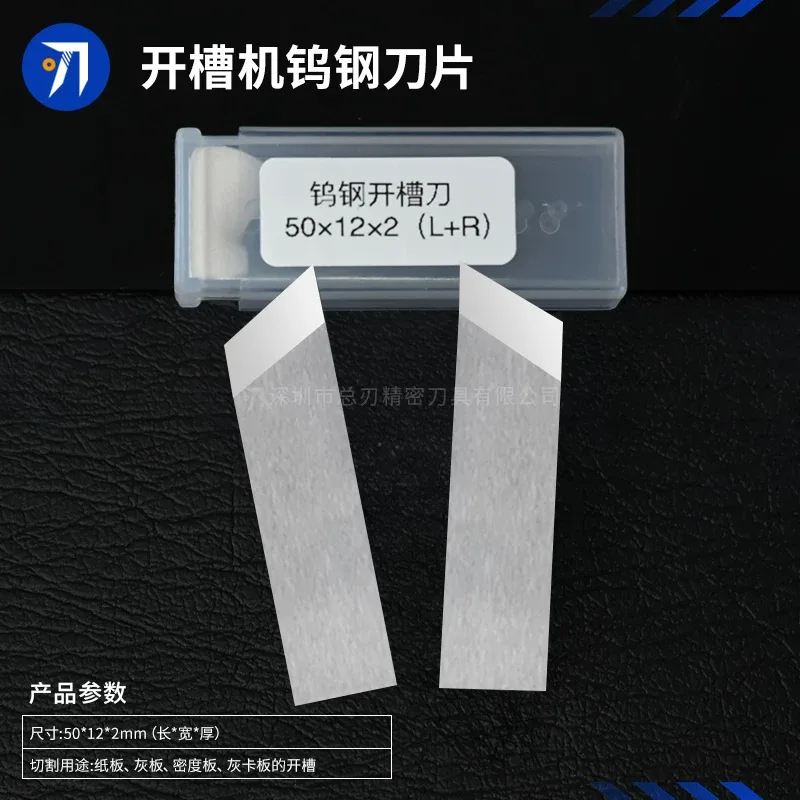
5Pairs-50x12x2mm is listed as tungsten carbide (cemented carbide) with a hardness range of 88–95 HRA. The photograph below is tied to the selected blade. Compare the broad face and clamping end with the tool in your hand. A store photograph is an identification aid; it is not a scale drawing. If the mounting face looks different, send the drawing and a separate side view before requesting a trial.
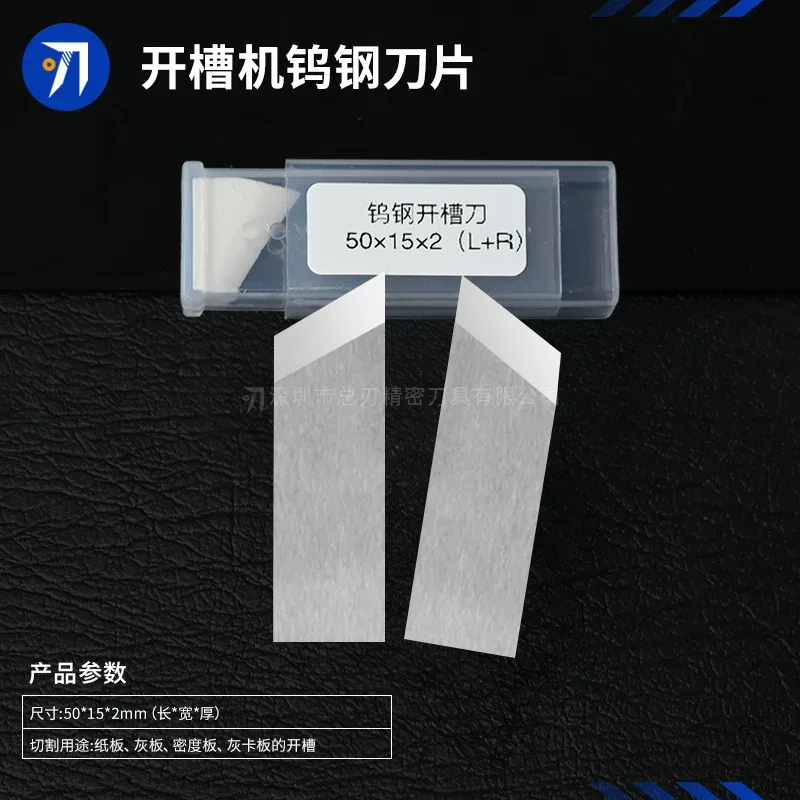
The selected pack for 5Pairs-50x15x2mm is shown as 10PCS. Keep that pack description separate from the blade dimensions when preparing a requisition. A request for a number of pieces is easier to check than a request for several packs of unspecified size. Ask the supplier to confirm how many individual tools will arrive and which profile the workshop should inspect on receipt.
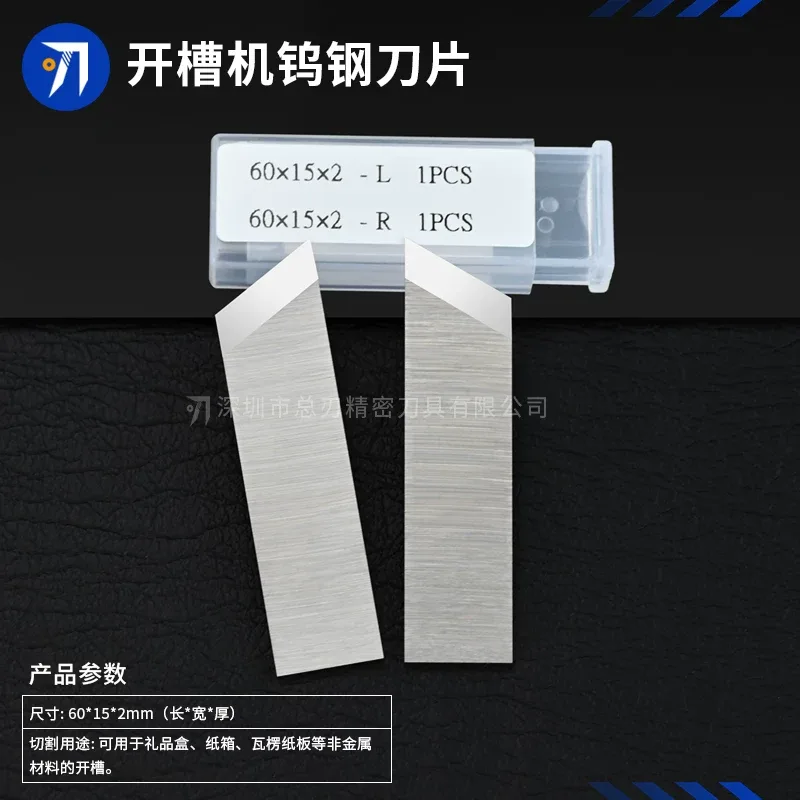
Use the product page for 5Pairs-60x15x2mm as an independent reference when discussing the trial. The page links the chosen variant to the photograph and the inquiry. Include that link with your material description and acceptance sample so that the supplier opens the same option. If the marking on an existing tool is incomplete, say which part is missing rather than treating the closest catalogue name as a confirmed identification.
Continue with blade profiles in this family, or check replacement blades by machine.