
Preserve evidence
A chipped oscillating blade can stop a production run, but the damaged tip alone rarely identifies the cause. Preserve the last accepted part and the first rejected part, and mark where the change began. Stop using a cracked or damaged edge and follow the machine’s isolation and blade-handling instructions. The following seven checks organise an inquiry for the workshop and tooling supplier. They do not prescribe machine settings or a service-life limit for an unknown head and material.
First, compare the blade profile with the material stack. A point selected for a thin, flat layer may see a very different load in a dense backing or a hard inclusion. Inspect the underside and the waste for evidence of an abrupt change in stock. Second, check the approved relationship between working edge and stock depth. Overall tool length is not cutting reach. Ask whether the edge could have contacted the backing or table and whether the holder supported the blade as intended.
Build a short timeline from evidence that can be checked. Start with the delivery label, the date the pack was opened, the machine and head fitted, the material lot and the program revision. Add the last successful cut and the first rejected one. Leave a blank where information is unavailable. An honest blank gives the next investigator a useful question, whereas a convenient assumption can send the investigation towards an unrelated material or process.
Review the tool and the table
Third, review the motion program with the operator. Record the stroke and feed settings actually used, then compare them with the equipment maker’s guidance for the installed head. A defect confined to sharp changes in direction is a different observation from progressive wear along a straight line. Keep the program revision alongside the sample. A later file with the same part name may use a different path, and combining evidence from both can lead the investigation in the wrong direction.
Fourth, examine the holder when the machine is safely isolated. A damaged seating face, accumulated debris or an incorrect clamp can change the way a blade is supported. Record the location of witness marks on the shank. Fifth, inspect hold-down and backing. A loose edge of material can rise into the tool or shift during a turn. Mark where movement occurred on the table and whether the same defect appears when an authorised operator repeats the test with correctly secured stock.
Choose one comparison that is safe, authorised and likely to distinguish the leading explanations. For example, inspect a retained piece of unused stock for a hard inclusion before planning another machine trial. If a trial is necessary, agree which observation would support each explanation and who will approve the setup. Do not deliberately recreate a collision or keep running a damaged tool. A measured inspection of a fixture or a marked sample often provides the missing evidence without another cut.
Build a verifiable fault record
Sixth, separate normal edge wear from impact damage. Under magnification, note whether the defect is a local missing piece, a continuous rounded edge or a deposit from the stock. Photograph the working region and a part of the edge that did not contact material. A photograph cannot establish hardness or alloy composition. If batch inspection is required, supply the purchase and packing information so the factory can determine which records and inspection conditions apply.
Seventh, review the path from delivery to installation. A blade can strike another part in a drawer or during an unprotected tool change. Check whether unused pieces remain in the delivered packaging and whether the first defect appeared before production began. Keep suspect pieces separate with their labels. Document the observations even when the cause is still open. A repeatable comparison between an undamaged reference, the affected tool and the same material lot gives the workshop a better basis for corrective action than replacing several variables at once.
Return useful evidence to procurement as well as production. Keep the damaged piece individually protected, photograph its label, and state whether other pieces from the pack have been inspected. If the factory is asked to review hardness, distinguish the catalogue range from a measurement on the affected batch. If a drawing is involved, identify the revision. Close the record with what was confirmed, what changed and how the next acceptable sample will be recognised on the line.
Read the selected ZMUSREN listings
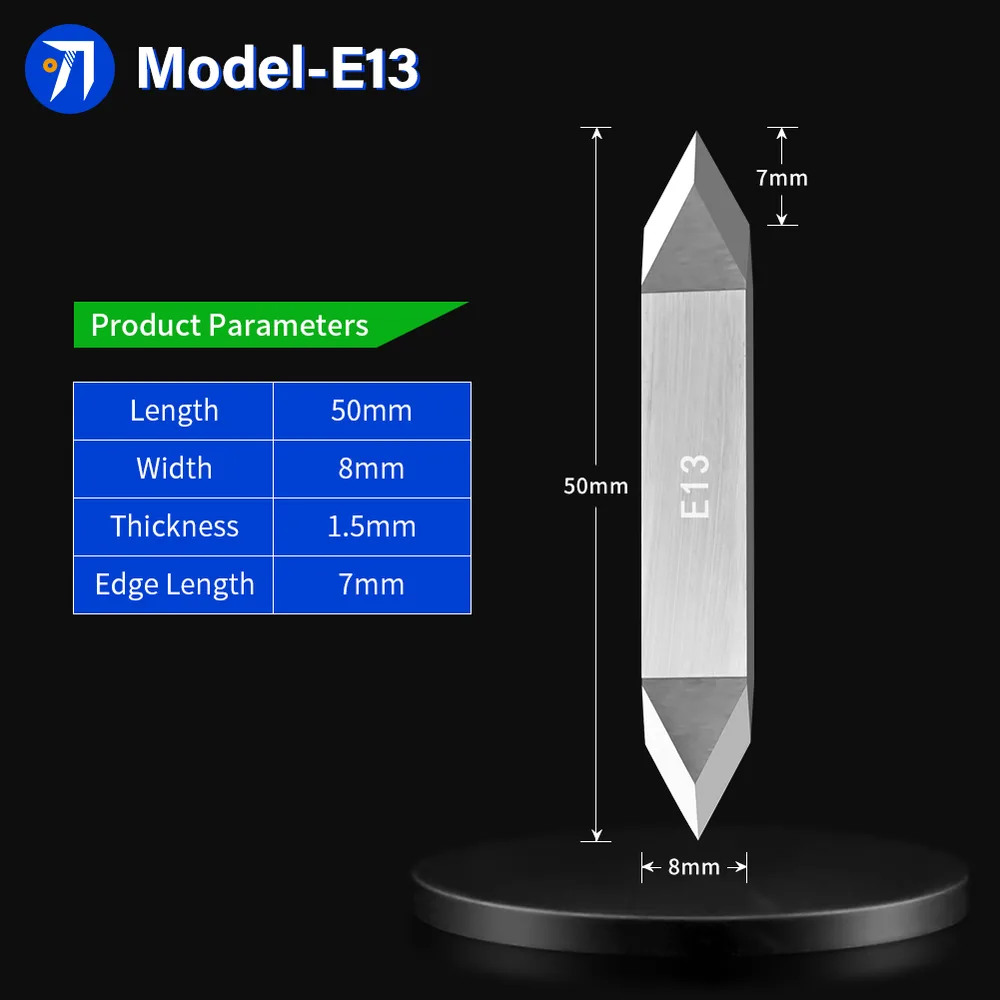
E13 is listed as tungsten carbide (cemented carbide) with a hardness range of 88–95 HRA. The photograph below is tied to the selected blade. Compare the broad face and clamping end with the tool in your hand. A store photograph is an identification aid; it is not a scale drawing. If the mounting face looks different, send the drawing and a separate side view before requesting a trial.
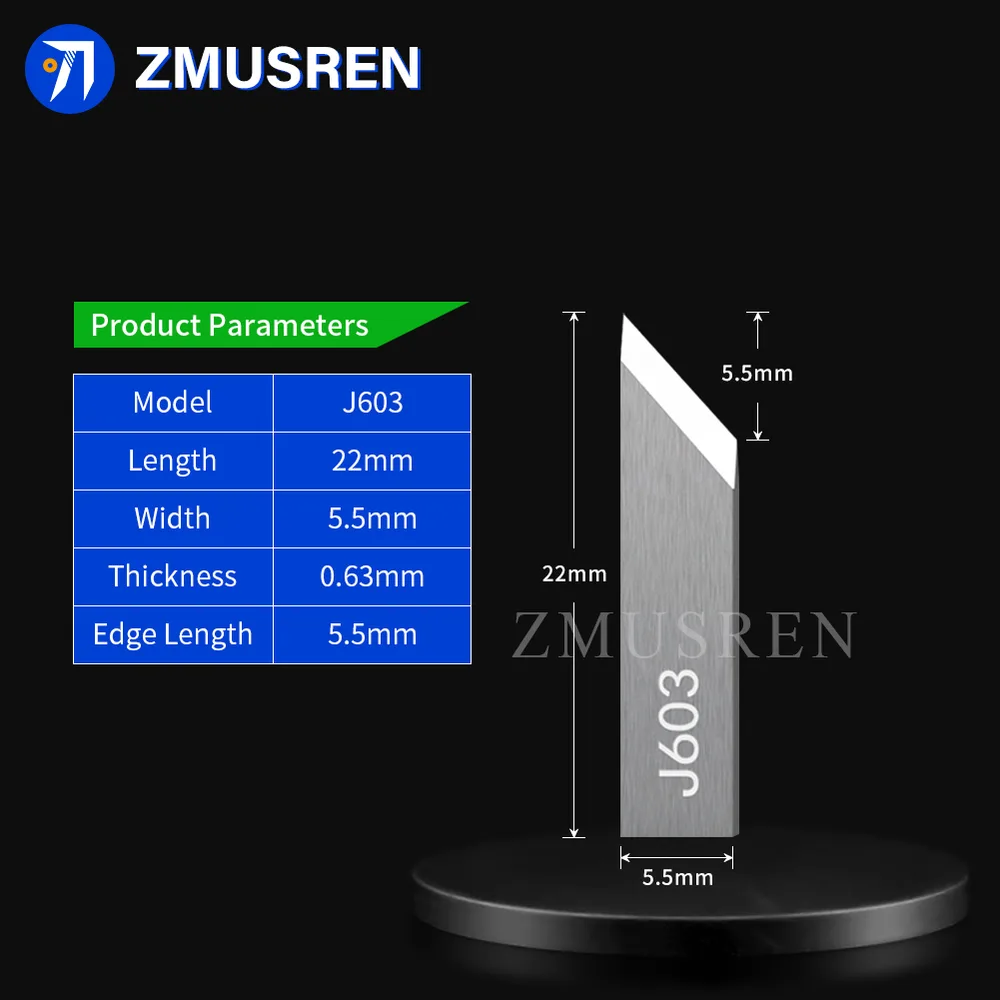
The selected pack for J603 is shown as 10PCS. Keep that pack description separate from the blade dimensions when preparing a requisition. A request for a number of pieces is easier to check than a request for several packs of unspecified size. Ask the supplier to confirm how many individual tools will arrive and which profile the workshop should inspect on receipt.
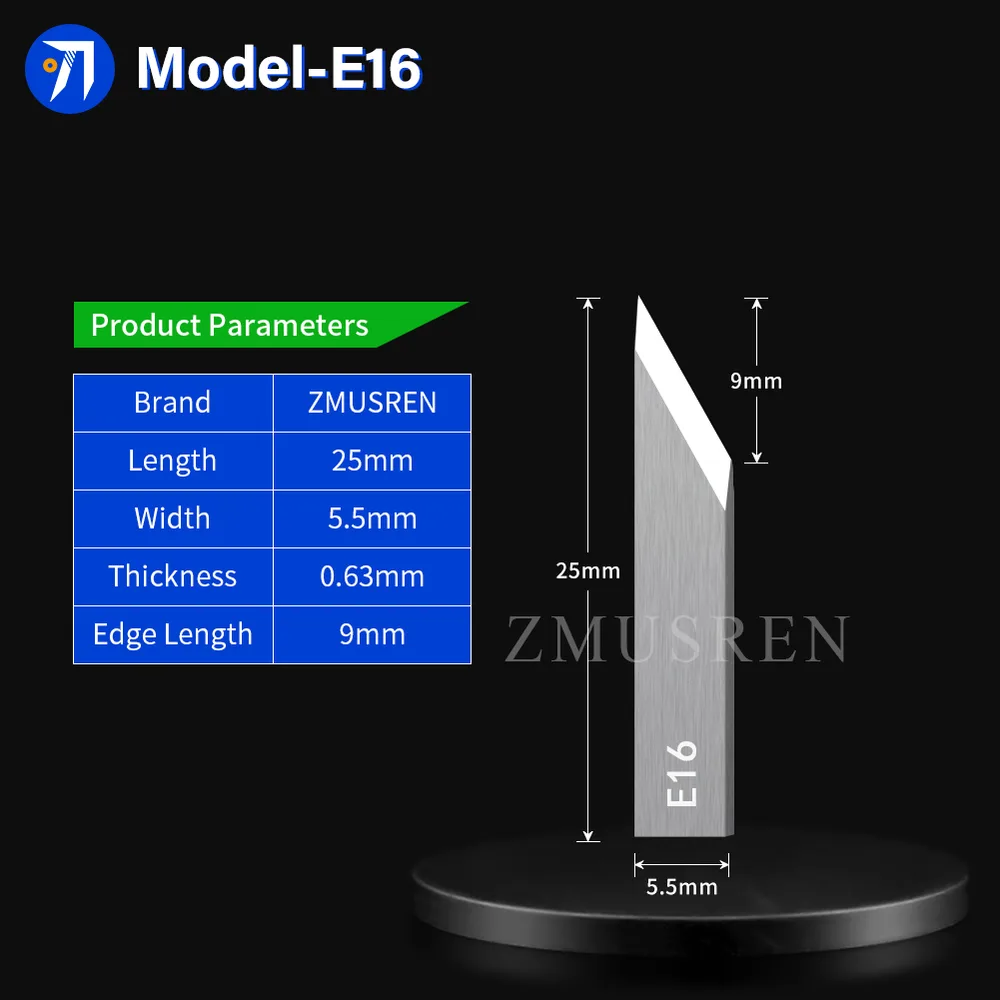
Use the product page for E16 as an independent reference when discussing the trial. The page links the chosen variant to the photograph and the inquiry. Include that link with your material description and acceptance sample so that the supplier opens the same option. If the marking on an existing tool is incomplete, say which part is missing rather than treating the closest catalogue name as a confirmed identification.
Continue with blade profiles in this family, or check replacement blades by machine.